Safety as a relational and field variable
What we call safety is shaped by our lived experience, what we carry, and what happens between us.
When I saw this theme, many ideas came to mind.
The themes of safety and fear are central to my work as a trauma therapist with male survivors of sexual abuse. As a female therapist, I’ve noticed how differently safety and fear can sometimes land in the room compared to my previous work with mostly female survivors.
The absence of safety often shows itself in subtle ways:
Looking over your shoulder before you speak
Holding your breath for an extra second
A silence masked with a smile
Leaving the party too soon
As a Gestalt therapist, the first thing I’m curious about is what safety looks like for the person I am with. What is their starting point?
If someone is in an abusive relationship, or still living in a place where they are reminded of their trauma day in, day out, their capacity to engage with wider concerns, such as the state of the world, may be significantly limited.
Someone who may have never felt safe in their family or system may also struggle with feeling safe in a group or as part of a community, especially when that community is not their own.
So, my reflection is that for some of my clients, safety is clearly field dependent.
For others, it is relationally driven.
And for some, their intersectionality may mean they have never known the feeling of safety at all.
So how can we create safety when there are so many variables?
I find the relational and dialogical nature of Gestalt therapy particularly suited to this, because when we work phenomenologically, we are not interpreting someone else’s experience. We simply observe and reflect what we see.
That furtive look over the shoulder.
That intermittent laughter every time a certain topic comes up.
Fear is an embodied experience. Whether or not it is accessible to my clients, I often notice sensations in my own body that make me wonder what might be happening for them. Naming this, at times, can offer enough support for something new to emerge.
For example, one client realised that, as a man, he had not recognised feeling unsafe in his relationship because he did not feel physically threatened. Another felt that the things he is able to experiment with safely in therapy are usually non-existent in his life.
These and other moments in my work informed the title of this reflection on safety and fear.
The world may be becoming a less safe place for some of us. For others, it has never felt safe. In those contexts, fear can be understood as an intelligent adaptation.
So how do we make it possible to navigate safety and fear in such an uneven field?
As a Gestalt therapist, I am reminded of the value of curiosity about ourselves and others, and of how, as ideal as it may be, we can only aim for horizontalism, as we do not start from the same baseline.
Owning that difference, naming the power imbalance, and whatever feelings may be present for each of us in this, could be a start.
Being aware of your privilege and staying with the discomfort that it may bring.
Paying attention to our own phenomenology without trying to explain or move away from another’s experience.
Making ourselves available for true dialogue, the kind where you are not already preparing an answer before the other has even finished talking.
Survival across different field configurations can be rich and thought-provoking.
Themes such as gender and culture are also in my mind. What is experienced as safe or unsafe is also shaped by culture, context and history, something that would require a much wider exploration than I can offer here.
Therapy gives me hope that, as therapists and as humans, we can work with these variables through what the Polsters described as the “safe emergency”. Creating dynamics similar to those that occur in life, and being met differently through curiosity and dialogue.
This is one of the many reasons why I find the healing power of groups so exciting to witness and work with. A Gestalt therapy group can act as a microcosm of so many dynamics of the wider field. Am I safe here? Will I be accepted as I am if I show my true self?
Realistically, a group will not always feel safe for all its members, and it is how this is worked with that can make a difference. If an individual can find their place in the group and speak from it, something may shift for them and for the group.
I am left reflecting on the ever-changing nature of safety and fear, as I experience some of both within myself some of both when I think of the prospect of sending off this reflection to be read by members of my Gestalt community.
These feelings have come and gone at different points in the writing of this reflection, depending on what was becoming figure and my relationship to it.
As I end this reflection, I am left with hope.
Hope that the elements that make Gestalt what it is today are the very same that will enable us to navigate safety and fear in ourselves and with others.
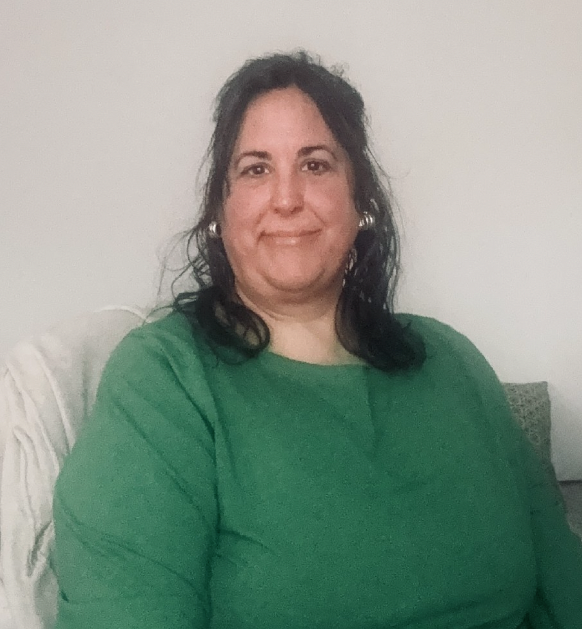
Marta Carbajo is a UKCP-accredited Gestalt psychotherapist based in London. She works with individuals and groups in private practice and within a specialist service supporting male survivors of sexual abuse. Her work is relational and trauma-informed, with an interest in identity, culture, neurodiversity and intergenerational patterns. Marta offers therapy in English, Spanish and Italian, and writes reflections on therapy, identity and relational work on Substack@kintsugipsychotherapy.